

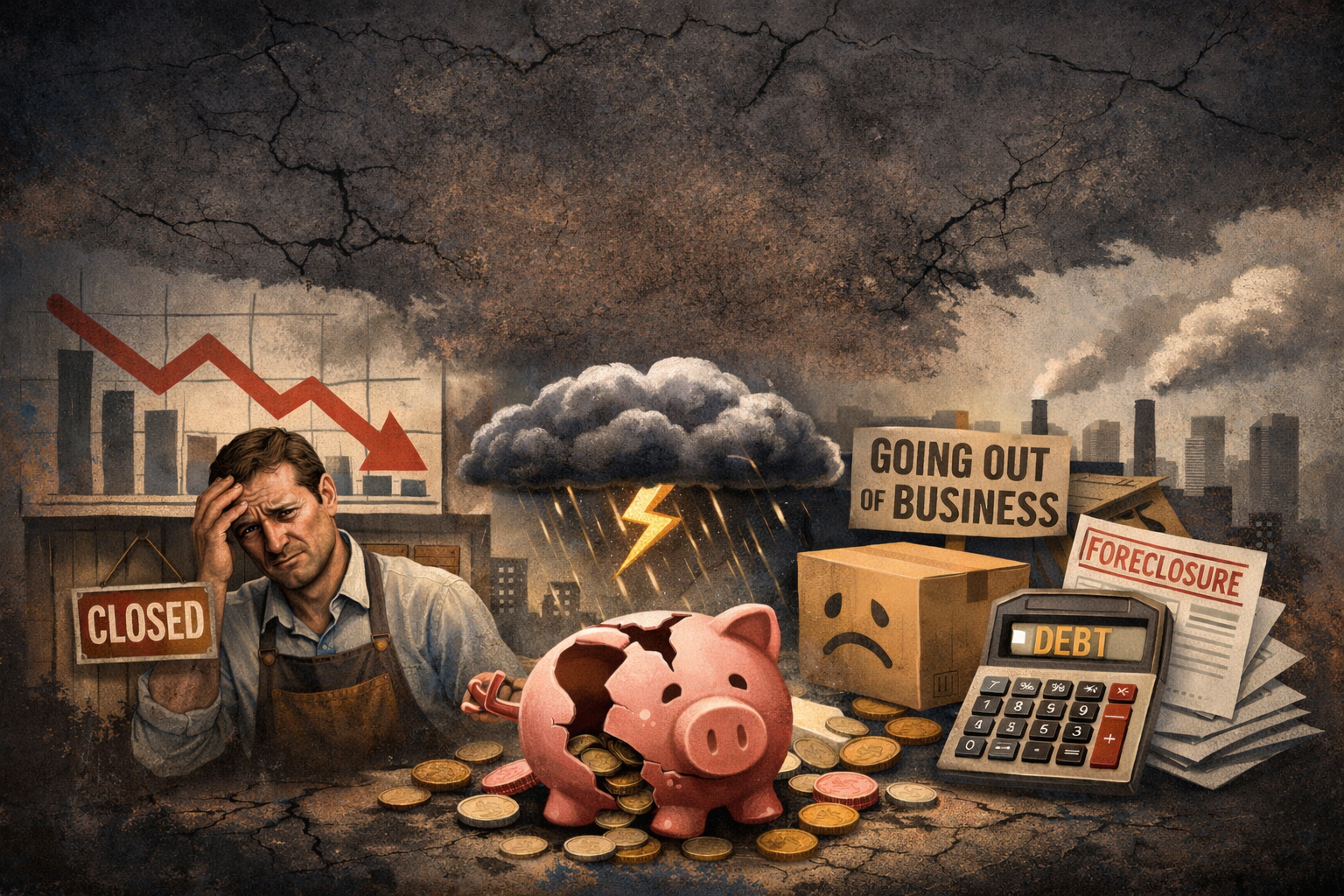

Starting a small business is often driven by hope, ambition, and the desire for independence. Many entrepreneurs dream of becoming their own boss, escaping rigid jobs, and creating something meaningful. Yet, despite good intentions and hard work, a large number of small businesses struggle—or fail—within the first few years.
The reasons are rarely about luck alone. More often, they stem from mindset, planning gaps, and resistance to change. Let’s explore the most common reasons why small businesses struggle and what goes wrong behind the scenes.
The Initial Thought Process: From Self-Employed to Business Owner
Most small businesses begin with a self-employment mindset, not a true business mindset. The owner’s initial thought is often:
- “I want to work for myself”
- “I don’t want a boss”
- “I’ll earn more doing this on my own”
While this motivation is understandable, it leads to limited thinking. The owner becomes the center of everything—sales, operations, decisions, and execution. Instead of building systems, they build dependency on themselves.
A true business owner thinks beyond daily survival. They think about delegation, scalability, branding, and long-term value creation. Without this shift in mindset, the business remains small, fragile, and heavily dependent on one person.
Lack of Vision and Poor Planning
Many small businesses start without a clear vision. The focus is on opening the shop, getting the first few customers, or generating immediate cash flow. Long-term questions are ignored:
- Where do I want this business to be in 3 or 5 years?
- How much investment will growth require?
- What is my roadmap?
There is often no proper planning for expenses, no clear CAPEX budget, and no allocation for future upgrades, technology, or expansion. Growth then becomes reactive instead of strategic.
Without a roadmap, decisions are made randomly—based on emotions or short-term pressure—rather than data and direction.
Insufficient Industry Knowledge and Ignoring Changing Trends
Many owners enter a business because it looks profitable or familiar, not because they deeply understand the industry. Over time, this lack of knowledge becomes dangerous.
Markets evolve. Customer behavior changes. Technology disrupts traditional models. Yet many small business owners continue doing things “the way they always have.”
Ignoring industry trends, digital tools, customer expectations, or new competitors slowly pushes the business out of relevance. In today’s fast-changing environment, learning is not optional—it’s survival.
The “I Know Everything” Attitude
One of the most damaging traits in struggling businesses is the “I know everything” mindset. The owner believes:
- Consultants are unnecessary
- Employees don’t understand the business
- New ideas are risky or useless
This attitude blocks learning and innovation. No business can grow if the owner stops evolving. Successful entrepreneurs are curious, open to feedback, and willing to admit what they don’t know.
Growth begins where ego ends.
Dominating Leadership and Suppressed Employees
In many small businesses, leadership turns into control rather than guidance. Employees are expected to follow instructions, not contribute ideas. Questioning decisions is discouraged.
When people don’t feel heard, they stop thinking creatively. Talented employees either leave or disengage mentally. The business loses fresh perspectives and innovation.
A healthy business culture allows space for ideas, experimentation, and mutual respect. Growth is faster when employees feel like contributors, not just workers.
Lack of Competition Monitoring
Some business owners assume that once they have customers, competition doesn’t matter. This is a costly mistake.
Competitors constantly:
- Improve pricing
- Upgrade services
- Enhance customer experience
- Use better marketing strategies
Without regular competition analysis, a business slowly falls behind. Understanding what competitors are doing well—and where they are weak—helps refine strategy and stay relevant.
Ignoring competition doesn’t eliminate it; it empowers it.
Ignoring the Importance of Marketing in the Current Era
One of the biggest reasons small businesses struggle today is the belief that “good products sell themselves.” That may have worked once—but not anymore.
Marketing is no longer optional. Digital presence, branding, customer communication, and visibility are critical. Many small businesses either avoid marketing completely or treat it as an expense instead of an investment.
In a crowded market, the business that communicates better often wins, even if the product is similar.
Final Thoughts
Small businesses don’t fail overnight. They struggle slowly—due to mindset limitations, lack of planning, resistance to learning, and fear of change.
The good news? Most of these issues are fixable. With the right mindset shift, structured planning, openness to learning, and focus on people and marketing, small businesses can move from survival mode to sustainable growth.
Success doesn’t come from working harder alone—it comes from thinking smarter, adapting faster, and leading better.
If you are a Small Business owner you and reading this and resonate the same, you still have time. Pl connect with us and let’s re-write your growth story together.
Move Forward with Direction, Awareness and Confidence
Subscribe to our blog
Get notified about new posts